
Architects have a strange professional handicap: your best work stands in full public view, photographed and admired — and yet when a prospective client searches your firm's name, half of you show up as nothing more than a COA registration number and a dead Instagram link. The buildings are visible. The architect isn't.
Does an architect in India need a website in 2026, and is it allowed? Yes on both counts. The COA's Professional Conduct Regulations restrict advertising and self-praise, but they expressly permit an architect's name to be associated with illustrations and descriptions of their own work in public media — which is precisely what a portfolio website is. This guide covers what a website for architects in India can show under COA rules, how to build a portfolio site that doesn't crawl, and what it actually costs.
Standard caveat from someone who builds websites, not legal opinions: this is general information. Read the regulations yourself — they're short — before you publish.
Clients Judge the Portfolio Before They Ever Meet You
Architecture is bought on evidence. Nobody commissions a ₹3 crore house from a firm whose work they haven't seen — and "seen" now means "found online at 11 pm". The numbers behind that behaviour:
Sources, briefly: the Council of Architecture's state-wise register listed 1,22,769 architects as of early 2026. The IAMAI–Kantar ICUBE report puts India past 900 million internet users in 2025. The 76% figure is from a Visual Objects consumer survey, and the "near me" growth comes from Google's own India search data.
Instagram Is a Feed, Not a Portfolio
Most younger firms answer this with "we're on Instagram". Good — stay there. But Instagram crops your double-height living room into a square, buries your best project forty posts deep, and shows your work between a reel of someone's lunch and an ad for tiles. You don't control the order, the context or the algorithm.
A developer shortlisting firms for a clubhouse project doesn't scroll your grid. He opens three websites side by side in browser tabs and compares. If you're not one of the tabs, you're not in the comparison. The firms that lose this way never find out — the call simply goes elsewhere.
COA Rules: What a Website for Architects in India Can and Can't Show
The Architects Act, 1972 and the Architects (Professional Conduct) Regulations, 1989 govern this, and violating them is professional misconduct. The headline rule: an architect shall not advertise professional services or allow their name to be used for publicity. Written in 1989, it reads strict. Read the exceptions, though, and a clear space opens up for a portfolio website.
What the Regulations Allow
- Your name associated with illustrations and descriptions of your own work in the press or other public media — the clause a portfolio site lives under. Photographs of your buildings with factual project descriptions are your work, presented as record.
- Name and address in a directory or website listing — the regulations were amended to say so in as many words.
- Factual particulars: qualifications, COA registration number, the firm's history, contact details.
- Your name on brochures and project material prepared by clients for projects you were commissioned on.
What They Prohibit
- Advertising and solicitation — paid promotion of your services, cold outreach dressed as marketing.
- Self-laudatory language — "award-winning visionary studio", "Pune's finest design firm". State the award factually if you must; don't crown yourself with it.
- Comparative claims — anything that puts another architect down to lift you up.
- Misleading content — renders passed off as built work is the classic offence. Label renders as renders.
The practical reading: show, don't sell. A site that says "Residence at Aundh, Pune — 4,200 sq ft, completed 2024" with honest photography is a professional record. A site that says "India's most innovative studio — book now!" is an advertisement. The first builds a practice; the second invites a complaint.
The same discipline applies to your project write-ups. Flat, factual prose that still reads well — and carries the search terms clients actually type, like "residential architect in Pune" — is harder to write than it looks. It's a job our content writing team does daily for regulated professionals: copy that informs, ranks and never strays into self-praise.
Project descriptions that rank on Google and stay on the right side of the COA regulations.
Get My Portfolio Written ProperlyAn Image-Heavy Site That Loads Fast — That's the Whole Job
Here's where architect websites die. You hand the developer 60 photographs at 8 MB each, the homepage becomes a 200 MB download, and the site takes eleven seconds to open on a client's phone. The portfolio that was supposed to impress never gets seen. For an architecture site, speed isn't a technical nicety — it's the difference between a portfolio and a timeout error.
What a properly engineered portfolio site does differently:
- Responsive image delivery: each photo served at the exact size the visitor's screen needs — a phone gets a 100 KB version, not the 8 MB original.
- Modern formats and lazy loading: WebP/AVIF compression and images that load only as the visitor scrolls. Galleries feel instant.
- A project grid that respects the work: full-bleed images, generous white space, no cluttered sidebar fighting your elevation shots.
- Project pages that work as case records: location, area, year, status, drawings if you wish — structured so Google can index every project.
- Mobile first: over 80% of Indian search traffic is on phones; your portfolio's phone layout is its real layout.
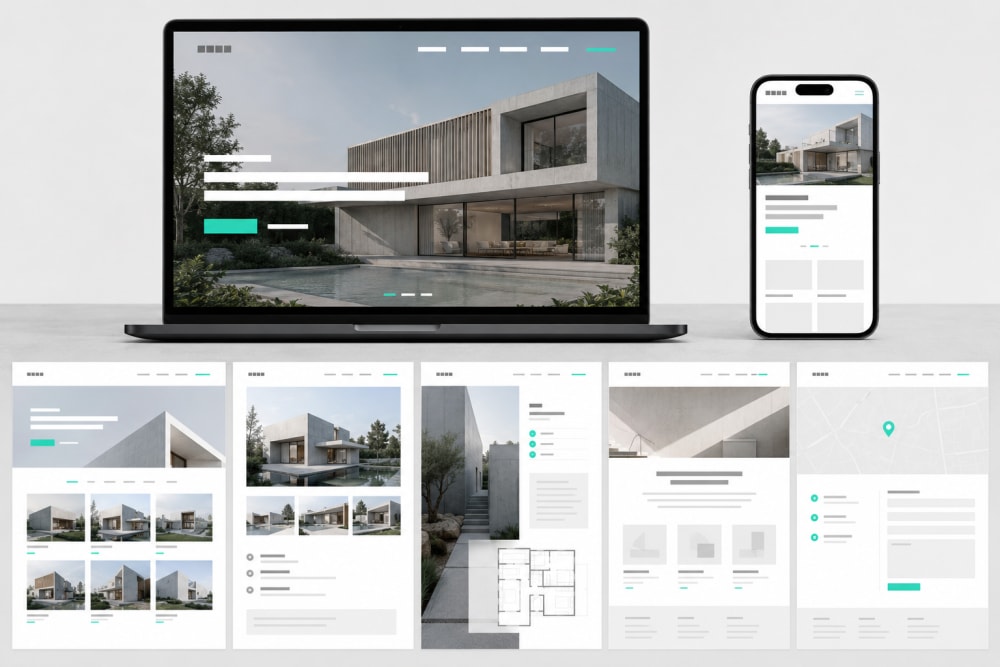
This is engineering, and it's decided before design begins. At Webknown's web development practice we build portfolio sites to a sub-two-second load even with image-heavy galleries — compression, CDN delivery and lazy loading handled at the code level, most sites live inside two weeks.
A gallery-heavy portfolio site that still loads in under two seconds — built in one to two weeks.
Get a Portfolio Site QuoteWhat a Website for Architects in India Costs in 2026
Real numbers — the same pricing published on our services page:
Scale that against your own fees. One residential commission typically clears several lakh; the site that helps win it starts from ₹40,000, paid once, and works around the clock for years. Few line items in a practice's accounts pay back faster.
Your Website Is the First Design You Show a Client
There's an irony specific to this profession: a firm obsessive about shadow gaps and material palettes will tolerate a website with default fonts and a stretched logo. Clients notice. Right or wrong, they read your website as a sample of your design judgement — if the firm's own digital home is careless, what does the working-drawing set look like?
The fix isn't decoration; it's the same restraint you practise in buildings. A disciplined grid, two typefaces, a palette pulled from your photography and a mark that holds up at favicon size. Identity work, done once, properly.
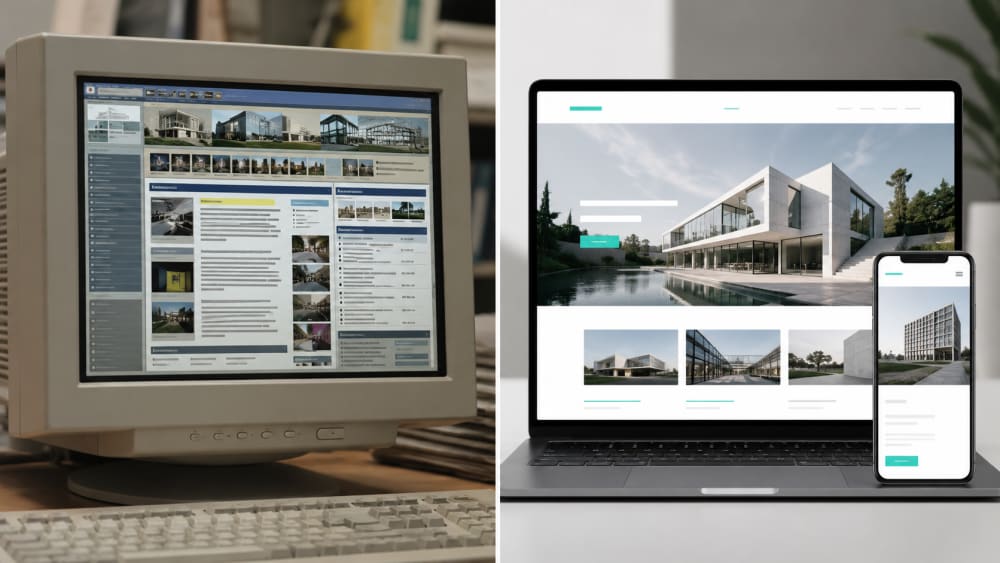
A visual identity as considered as your buildings — logo, type system and palette that carry across site, deck and signage.
Build My Studio's IdentityQuestions Architects Actually Ask
Can architects in India have a website under COA rules?
Yes. The Conduct Regulations bar advertising and self-praise, but they permit an architect's name and address in website listings and allow your name to be associated with illustrations and descriptions of your own work in public media. A factual portfolio site fits within that; promotional copy doesn't.
Can I show client projects on my website?
Showing your own completed work with factual descriptions is the permitted core of a portfolio. Be accurate — label renders as renders, credit collaborators where due, and get the client's consent for photographs of private homes as a matter of courtesy and contract, not just regulation.
How much does an architecture portfolio website cost in India?
A starter portfolio runs from about ₹15,000; a full custom-designed site with proper galleries, SEO and a blog starts around ₹40,000; portals with client logins and drawing-sharing start around ₹1,00,000. Hosting and domain are separate yearly costs you pay to those providers — roughly ₹4,000–10,000 a year on typical shared hosting (our website cost calculator breaks it down).
Isn't Instagram enough for an architecture firm?
Instagram is a discovery channel, not a portfolio. You don't control crop, order or algorithm, and serious clients comparing firms open websites, not grids. The strong play is both: Instagram to be found, a website to be chosen.
You'd Never Let a Client Skip the Site Visit. Don't Let Them Skip Yours.
Most Indian architecture firms still have no real website — search results for "architect in" most tier-2 cities prove it in seconds. That leaves the field open for whoever puts a fast, honest, well-photographed portfolio online first and lets the work argue its own case. Your next client is already comparing tabs. Make sure one of them is yours.
Twenty minutes on a call — bring your best project photos, leave with a clear plan, timeline and exact cost.
Book a Free 20-Minute Call


Comments0