
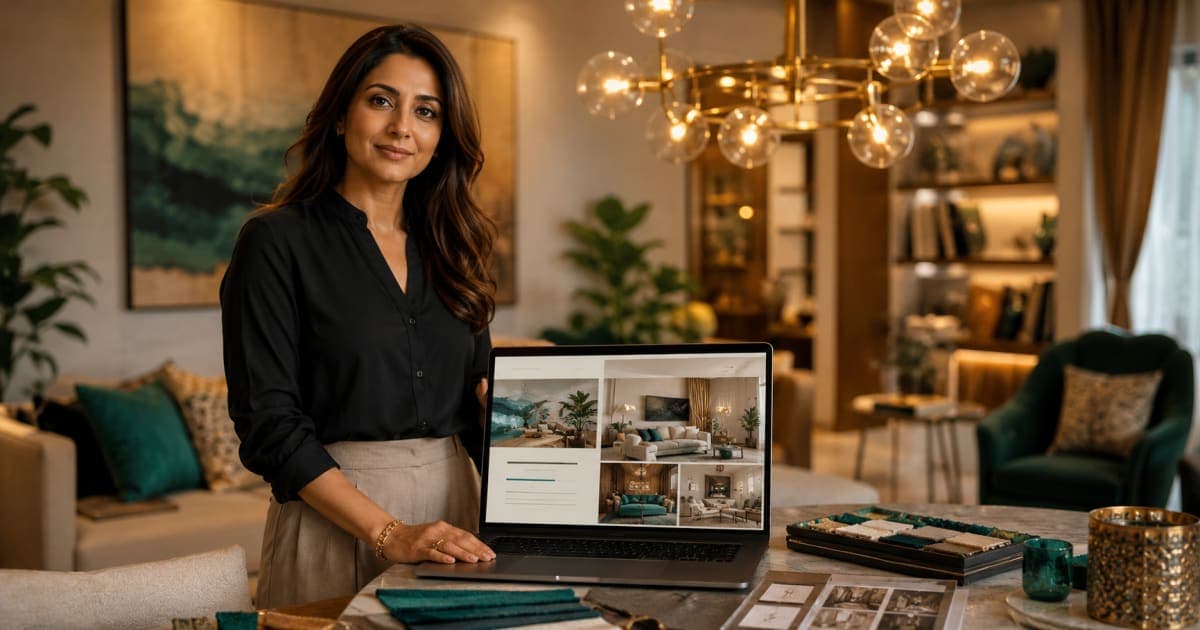
You've spent three years building a feed of gorgeous reels — the marble entryway, the fluted teak panelling, the slow pan across a Jaipur-blue bedroom. The likes pour in. The saves climb. And then a serious client with a ₹40 lakh villa fit-out taps your profile, looks for a way to actually hire you — and finds a link in bio that goes to another reel. So they keep scrolling. A website for interior designers in India is what catches that client instead of losing them.
Does an interior designer in India need a website in 2026? Yes — because social media gets you discovered, but a website is where browsers become enquiries. Instagram and Pinterest are the shop window; your website is the shop. A proper website for interior designers in India shows the work full-screen, carries your before-after galleries and reviews, and gives a high-intent client one clear way to reach you. This guide covers why that matters, what your site needs, and what it costs.
A Booming Market Means a Crowded Inbox of Competitors
The good news and the warning are the same fact: this is a big, fast-growing business, which means a lot of designers are chasing the same clients.
Where these come from: market-research firms peg India's interior design market around USD 37 billion in 2025, growing fast on the back of urban housing and rising household budgets. The IAMAI–Kantar ICUBE report confirms India crossed 900 million internet users in 2025. The 72% Instagram figure is from Retail Touchpoints, and Pinterest's own data shows pins outliving posts by months — a click engine, if it has somewhere to send people.
That last point is the whole argument. Every platform you're on is a discovery channel pointing somewhere. Right now, for most designers, it points at another social post. It should point at a website that closes.
Social Gets the Crush. The Website Gets the Commitment.
Think about how an actual project starts. A client in Pune saves twelve bedroom pins, follows four designers on Instagram, and screenshots a living room from a friend's housewarming. That's the crush phase — wide, casual, emotional. Then the project gets real, and the same person sits down to shortlist. Now they want to see complete projects, not cropped highlights. Scope. Range. Whether you've done a 3BHK in their budget. Whether past clients were happy.
Instagram can't answer those questions — it shows fragments in a fixed square, newest first. A website can: full case studies, room-by-room, with the brief, the constraints and the result. The client falls for you on social and decides on your website. Skip the second step and you're handing warm leads to whoever does have a proper site.

What a Website for Interior Designers in India Actually Needs
This isn't a corporate site with stock photos and three paragraphs about "passion". For a designer, the website is the work. Big visuals, almost no clutter, and a path to enquiry a client can't miss.
- A full-screen project gallery. Your photography at the size it deserves — edge to edge, not thumbnailed into a corner. Each project its own page: the space, the brief, the result.
- Before-and-after sliders. The single most persuasive thing an interior designer can show. The cramped builder-grade flat on the left, your transformation on the right. Nothing sells the value of design faster.
- Real testimonials and Google reviews. You have no advertising regulator to worry about — so use everything. Named client quotes, star ratings pulled from your Google Business profile, a short video walkthrough if a client will give one. Trust signals you're free to show.
- A clear enquiry path. A short form — name, location, project type, rough budget, timeline — plus a WhatsApp button. Make the next step obvious on every screen.
- Styled, fast-loading images. Stunning photos that load in a blink. Get this wrong and a 10 MB hero image kills the first impression before it renders.
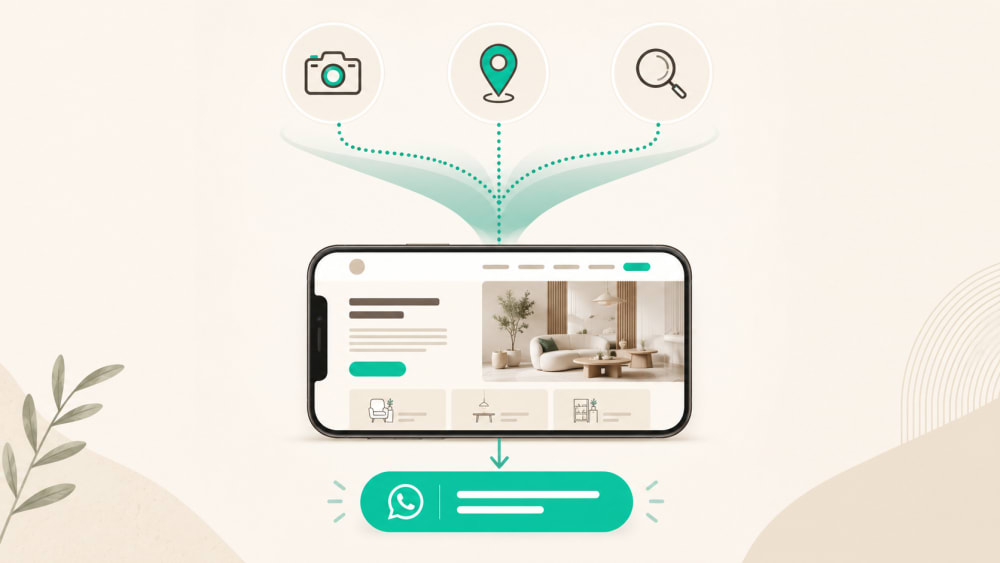
All of that rests on the build. A gallery-heavy site that loads slowly is worse than no site — it tells a design-conscious client you don't sweat the details. We build interior portfolio sites for sub-two-second loads even on image-heavy pages, with compression, modern formats and lazy loading handled at the code level. That's the core of Webknown's web development practice: most sites live within two weeks, mobile-first, enquiry path baked in.
A portfolio site that shows your work full-screen, loads instantly, and turns browsers into enquiries.
Get a Portfolio Site QuoteYour Brand Should Look as Considered as Your Rooms
Interior design is sold on taste, and your taste should be visible the second a client lands — before they read a word. A logo that holds up at small sizes, a colour palette drawn from your own photography, a typeface with some quiet confidence: these tell a prospect you have an eye, which is the one thing they're hiring you for.
The mismatch is jarring when it's wrong. A designer whose rooms are all restraint and proportion, paired with a clip-art logo and three loud fonts on the homepage — the client feels the gap even if they can't name it. Your visual identity should carry across the site, your Instagram highlights, your project decks and your invoice. One coherent look, made once.
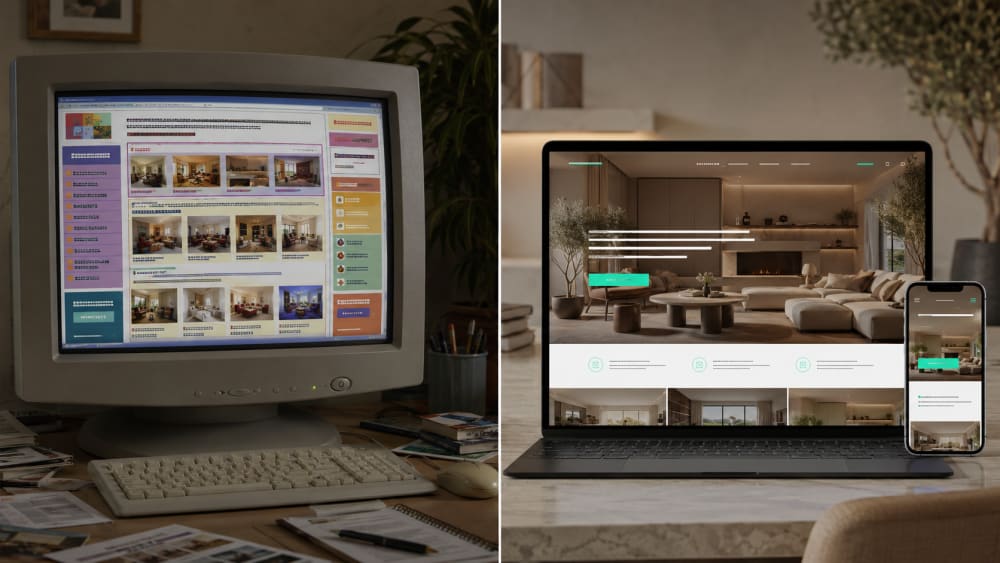
A studio identity as refined as your interiors — logo, palette and type that work across web, Instagram and decks.
Design My Studio BrandRun Ads All You Like — Just Don't Send Them to a Dead End
Unlike doctors, CAs or lawyers, you face no advertising ban. You can run Instagram and Google ads as hard as your budget allows — and many designers do, spending real money to boost reels and bid on "interior designer in [city]". Here's the leak: most of that spend lands people back on a social profile or a WhatsApp number, with no project depth, no reviews, no reason to trust you beyond one pretty image.
A website changes the maths. Point your ads at a site with full case studies, before-afters and an enquiry form, and the same ad budget produces more booked consultations — because the click lands somewhere that does the convincing. Ads buy the visit; the website earns the enquiry. Running campaigns without that destination is like paying for footfall to a showroom with the shutters down. Getting the ad spend and the landing experience to work together is exactly what our digital marketing team sets up for design studios.
Instagram and Google ads that point to a site built to convert — more consultations from the same budget.
Plan My Ads + WebsiteWhat a Website for Interior Designers in India Costs in 2026
Straight numbers — the same pricing on our services page:
Hold that against one project. A single residential fit-out often bills several lakh — so a site that starts from ₹40,000 and helps land even one extra commission a year has paid for itself many times over. Running costs after that are a domain and hosting, a few thousand rupees annually.
Questions Designers Actually Ask
Do I need a website if I already have a strong Instagram?
Yes — they do different jobs. Instagram gets you discovered; a website gets you hired. Serious clients comparing designers want full project case studies, reviews and pricing context that a feed can't hold. The strongest setup is both, with Instagram feeding traffic to the site.
What should an interior designer's website include?
Full-screen project galleries, before-and-after sliders, named client testimonials and Google reviews, an about/process section, and a clear enquiry form plus WhatsApp button. Above all, fast-loading, high-quality photography — the images are the sell.
How much does an interior design portfolio website cost in India?
A starter portfolio runs from about ₹15,000; a full studio site with galleries, before-afters, SEO and a blog starts around ₹40,000; client portals and décor e-commerce start around ₹1,00,000. Domain and hosting are separate yearly costs you pay to those providers — roughly ₹4,000–10,000 a year on typical shared hosting (our website cost calculator breaks it down).
Should I run Instagram or Google ads to my website?
You're free to — there's no advertising restriction on interior designers. Ads work far better pointed at a website with case studies and an enquiry form than at a bare social profile, because the landing page does the convincing. Pair the campaign and the site and the same budget books more consultations.
Your Best Project Deserves More Than a Square Crop
You already make rooms that make people stop and stare. The only question is whether the person holding the budget ever sees them at full size, in context, with a way to say yes. A feed can't do that. A website can — and right now most of your competitors still don't have one worth visiting. That gap is yours to take.
Twenty minutes on a call — bring your best project photos, leave with a clear plan, timeline and exact cost.
Book a Free 20-Minute Call

Comments0