
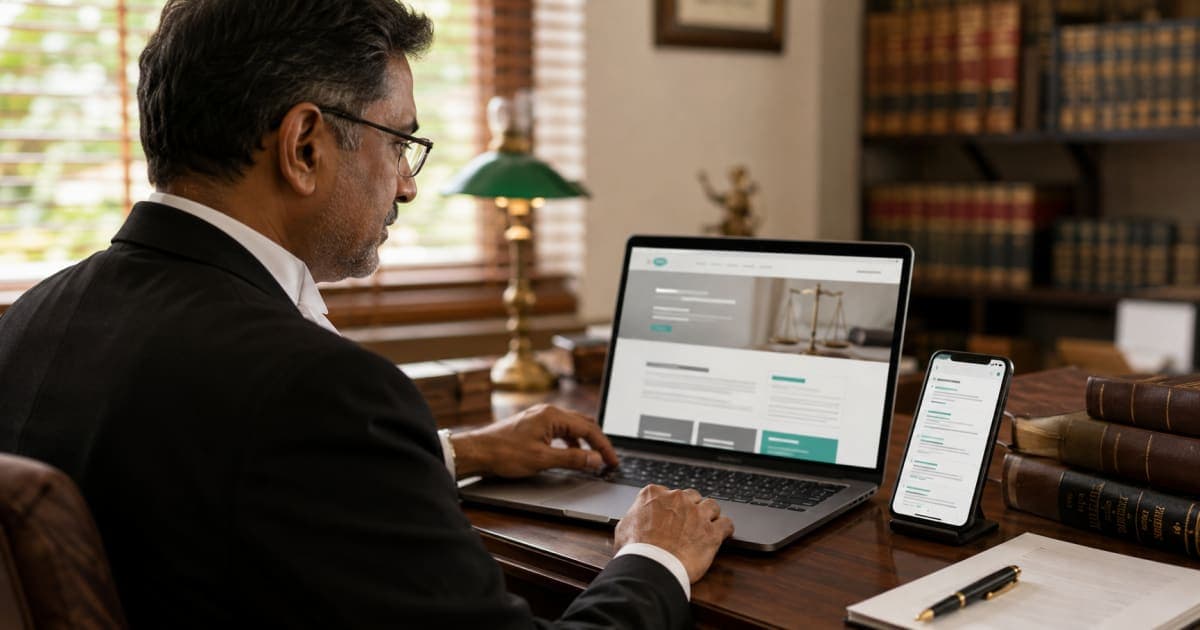
Ask ten advocates why they don't have a website and you'll hear the same two answers: "My work comes through referrals" and "The Bar Council doesn't allow it." The first is half true. The second is flatly wrong — and it's been wrong since 2008.
Do lawyers in India need a website in 2026? Yes — and it's permitted. Rule 36 of the Bar Council of India Rules bars advertising and solicitation, but a 2008 amendment expressly allows advocates to publish specified information on a website: name, contact details, enrolment particulars, professional and academic qualifications, and areas of practice. The clients you want — companies, founders, NRIs — already verify every professional online before engaging them. This guide covers what a website for lawyers in India may contain, what Rule 36 prohibits, and what a compliant site actually costs.
One thing before we start: this is general information from a web practitioner who builds sites for professionals, not legal advice. You're the lawyer — read the rules yourself before you publish anything.
Clients Now Search Before They Brief
The instinct that referrals are enough made sense when the client pool was offline. It isn't anymore.
Where these numbers come from: State Bar Council enrolment figures reported in 2025 put India's advocate count at roughly 20 lakh. The 96% figure is from FindLaw's US Consumer Legal Needs Survey — American data, but the behaviour has travelled here with the smartphone. The IAMAI–Kantar ICUBE report confirms India crossed 900 million internet users in 2025, and Google's own India data shows "near me" searches growing about 75% in a year.
Twenty lakh advocates and one client with a property dispute. He was given your name at a family function on Sunday. By Sunday night he'd searched it. What came up?
The Referral Now Has a Second Step
That's the shift most advocates miss. Referrals haven't stopped — they've gained a verification step. A managing director who's told "use Mehta, he did our arbitration" doesn't ring Mehta. He searches "Mehta advocate Bombay High Court", finds either a clean professional page with enrolment details and practice areas, or a stray bar-association PDF from 2014. One of those gets the brief.
For NRI clients — a growing slice of property, matrimonial and succession work — the website isn't a nicety. It's the only way they can check you exist before wiring a retainer from Dubai or New Jersey.
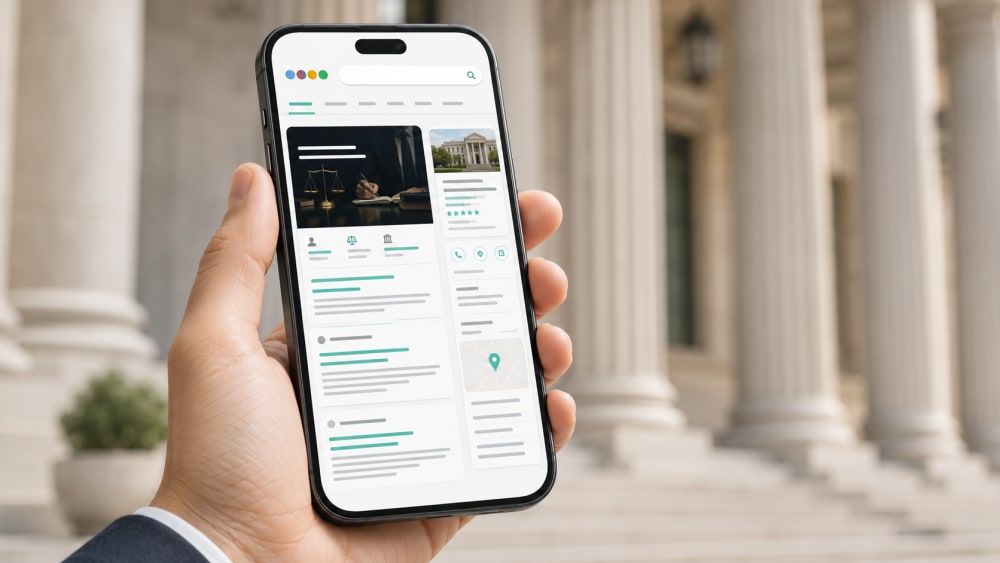
Is a Website for Lawyers in India Legal? Rule 36, Read Properly
Here's the part worth getting exactly right, because Section 35 of the Advocates Act treats violations as professional misconduct.
Rule 36 of Section IV, Chapter II of the Bar Council of India Rules prohibits advocates from soliciting work or advertising — directly or indirectly — whether by circulars, advertisements, touts, personal communications or interviews. That core prohibition stands in 2026.
But in 2008, the BCI added a proviso. An advocate may furnish information on a website, under intimation to and as approved by the Bar Council of India, limited to the particulars in the Schedule:
What the Proviso Permits
- Name and the name of your firm or chambers.
- Contact details — address, telephone, email.
- Enrolment particulars — enrolment number, State Bar Council, date of enrolment.
- Professional and academic qualifications.
- Areas of practice — stated as fact: "civil litigation, arbitration, company law."
- A declaration that the information furnished is true — the rules require it.
What Stays Prohibited
- Client names or testimonials. "He won my case" on your site is solicitation in a wig.
- Claims of specialisation or past results — "expert in 498A", "95% success rate", case win lists.
- Self-praise and comparison — "best advocate in Lucknow", "leading chambers", fee mentions designed to undercut.
- False or misleading content of any kind, anywhere on the site.
- Paid promotion of your practice — Google Ads for "hire top lawyer" is exactly what Rule 36 was written to stop.
The line is the same one the courts have drawn for a century: information is permitted, persuasion is not. A page that states who you are, where you're enrolled and what you practise is a digital nameplate. A page that argues why you're better than the advocate in the next chamber is an advertisement.
This is why the copy matters more than the code. A generic web designer will hand you a template with a "Why Choose Us" section, star ratings and a testimonial slider — three Rule 36 problems on one page. Whoever writes your site needs to know the Schedule before they type a word. Writing factual, search-friendly copy inside a regulator's fence is a specific skill, and it's precisely what our content writing team does for regulated professionals — we already do it for doctors under NMC rules and CAs under ICAI's website guidelines.
Website copy that informs clients and ranks on Google — without crossing Rule 36.
Get Rule 36-Aware Website CopyThe Five Pages a Compliant Advocate Website Needs
Forget the 30-page corporate sites of the big Mumbai firms. A practising advocate or a small chambers needs five things done well:
- Home: your name or firm name, city, courts you appear before, and how to reach you — above the fold, on a phone.
- Practice areas: one factual paragraph each. "We handle civil suits, consumer matters and arbitration" — no adjectives, no promises.
- Profile: qualifications, enrolment number and year, languages, bar memberships. This page does the trust-building your testimonials can't.
- Contact: chambers address with a map, phone, email, and the mandatory declaration that the information is true.
- Legal updates (optional but powerful): short, factual notes on judgments and amendments in your practice area. Educational writing isn't solicitation, and it's what Google ranks.
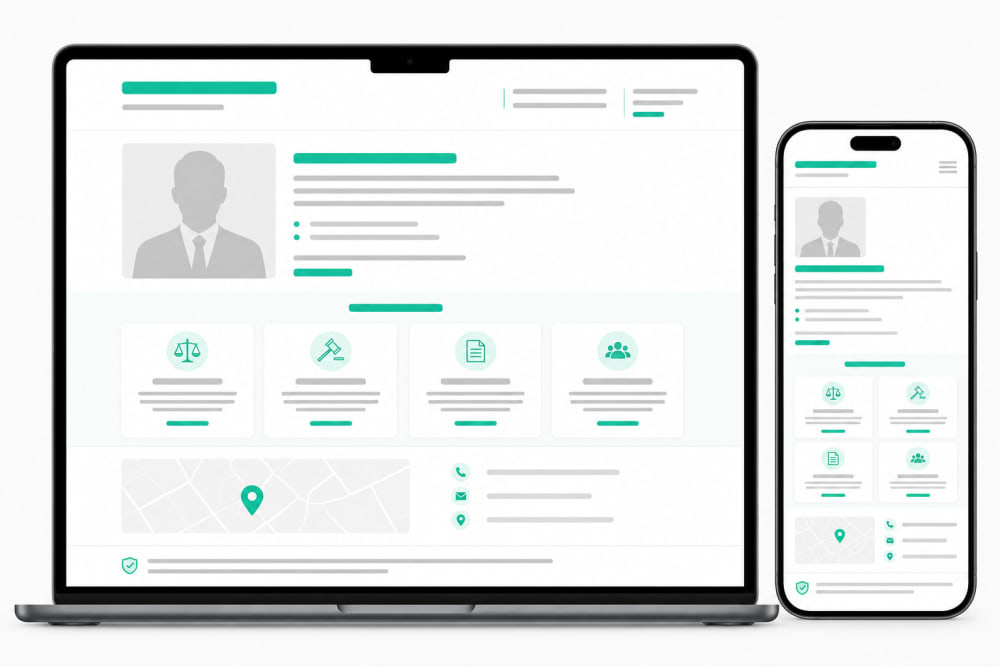
Two build details decide whether the site earns its keep. Speed — a client on a 4G connection outside a district court won't wait five seconds for your page. And mobile — in India more than 80% of searches happen on phones, so the phone layout is the real layout. Both are engineering choices, made before a single page is written. That's the standard we build to at Webknown's web development practice: sub-two-second loads, mobile-first, SEO handled at the code level, most sites live inside two weeks.
A fast, mobile-first chambers website — designed, built and live in one to two weeks.
Get a Free Website QuoteWhat a Website for Lawyers in India Costs in 2026
Straight numbers — the same pricing we publish on our own services page, because quoting in the dark helps nobody:
Perspective: the ₹40,000 starting price is less than the fee for a single decent arbitration appearance, and the site works every day for years. Annual running costs after that — domain plus hosting — are a few thousand rupees. Against one recovered referral, the arithmetic isn't close.
Gravitas Is a Design Problem Too
Rule 36 takes away every promotional tool — no testimonials, no win rates, no "leading firm" badges. What's left is presentation. A composed, restrained site with proper typography, a considered colour palette and a formal photograph says "senior counsel" without uttering a single prohibited word. Design is the one form of persuasion the Schedule doesn't regulate.
And the bar for getting this wrong is low. A gavel clip-art header, a stretched group photo and three fonts on one page don't just look dated — they make a client wonder whether your drafting is equally careless. Fair or not, the website is read as a work sample.
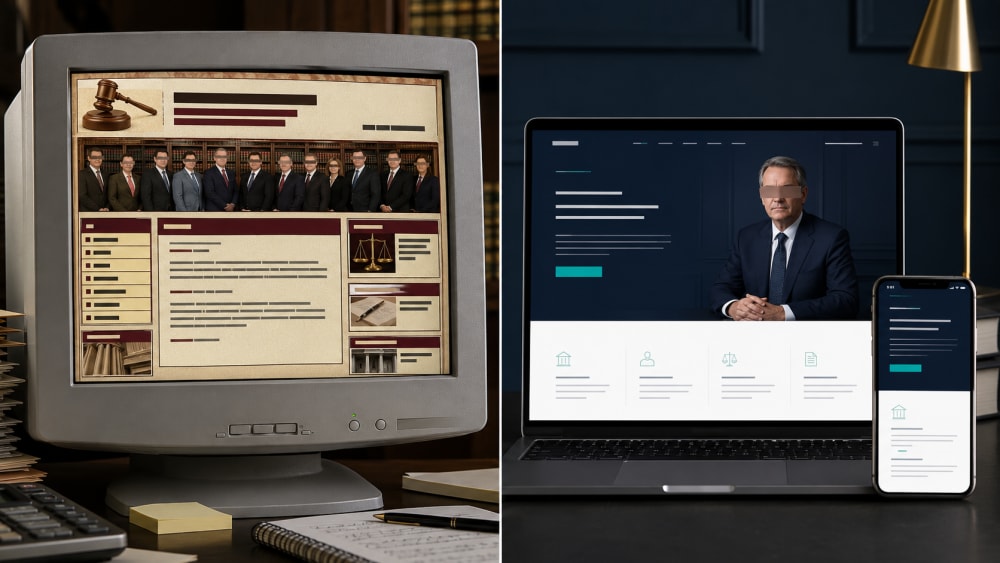
A chambers identity that carries the weight of your practice — typography, palette and portrait included.
Design My Firm's IdentityQuestions Advocates Actually Ask
Can a lawyer have a website in India?
Yes. The 2008 proviso to Rule 36 of the BCI Rules permits advocates to furnish specified information on a website — name, contact details, enrolment particulars, qualifications and areas of practice — under intimation to the Bar Council of India, with a declaration that the information is true.
Can advocates advertise on Google or social media?
No. Paid promotion of legal services remains barred by Rule 36, and breaching it is professional misconduct under Section 35 of the Advocates Act. A factual website that people find through organic search sits on the permitted side of the line; paid ads pushing your practice do not.
How much does a lawyer's website cost in India?
A compliant five-page site with a custom design starts around ₹15,000. A full firm site with more pages, full SEO and a legal-updates blog starts around ₹40,000, and portals with client logins start around ₹1,00,000. Domain and hosting are separate yearly costs you pay to those providers — roughly ₹4,000–10,000 a year on typical shared hosting (our website cost calculator breaks it down).
What can an advocate's website contain?
Stick to the Schedule: name, firm name, contact details, enrolment number and State Bar Council, qualifications, and areas of practice stated as plain fact. Add factual legal updates if you like. Leave out testimonials, results, success rates, specialisation claims and anything comparative.
The Quiet Window Won't Stay Open
Search "advocate in" almost any Indian city outside the metros and look at how thin the results are. Most of the bar still isn't online, which means an early, compliant, well-built site can hold the top of those results for years at almost no ongoing cost. Eighteen years after the BCI opened this door, walking through it still counts as being early. That won't be true much longer.
Twenty minutes on a call and you'll have a clear plan for your chambers' website — scope, timeline and exact cost.
Book a Free 20-Minute Call


Comments0